Trusted Aeration Experts in Dane County
Do you dream of a lush, vibrant lawn in Dane County? Keyman Lawn, Tree and Pest knows that core aeration is one of the most impactful services you can invest in for a thriving lawn.
Given the naturally high clay content in Dane County soils, compaction is a common issue. This “hard clay” or compacted soil prevents proper drainage, leading to dry spots and increased susceptibility to damaging insects and lawn diseases.
Why Does Soil Compaction Happen in Dane County?
Soil compaction is a natural process accelerated by factors like:
Weather:
Hot, dry summers common in Wisconsin can cause soil to compact and crack.
Foot & Equipment Traffic:
Regular walking, mowing, and other traffic press down on the soil.
Nutrient Imbalances:
Lack of essential nutrients can weaken soil structure, leading to faster compaction.
The Detrimental Effects of Compacted Soil:
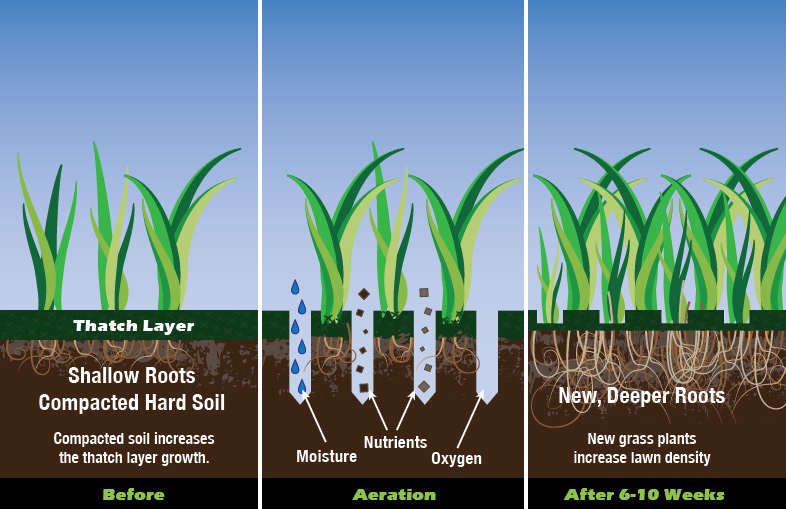
Compacted soil acts as a barrier, restricting the flow of vital moisture, air, and nutrients to your lawn’s root system. This results in weak, unhealthy turf. Additionally, compaction contributes to a thicker thatch layer, which provides an ideal breeding ground for many common lawn diseases and damaging insects.
When compacted soil chokes your turf, aeration opens the pathway for air, water and nutrients. Followed by overseeding, it fills in bare or thinning areas—resulting in lush, resilient grass.
Core aeration involves removing three-inch soil cores from your lawn. While seemingly simple, this process delivers significant benefits:
Reduces Soil Compaction:
Creates channels for air, water, and nutrients to penetrate the soil.
Decreases Thatch Buildup:
Helps break down the thatch layer naturally.
Promotes Deeper Root Growth:
Allows roots to expand and access essential resources.
Enhances Nutrient Absorption:
Improves the uptake of fertilizers and other treatments.
Increases Resistance:
Leads to healthier, more resilient grass that is less susceptible to diseases, insects, and weed infestations.
What is lawn aeration and why is it important?
Lawn aeration is the process of removing small plugs of soil to relieve compaction. This allows oxygen, water, and nutrients to penetrate deeper into the soil, reaching the grass roots more effectively. The result is stronger roots, thicker turf, and improved overall lawn health.
When is the best time to aerate my lawn in Wisconsin?
The ideal times are spring and fall. Fall is especially effective in Wisconsin, since cooler temperatures and warm soil encourage quick recovery and strong root growth before winter. Spring aeration helps lawns bounce back from winter stress and prepare for the growing season.
Do aeration and overseeding need to be done together?
Yes—this combination delivers the best results. Aeration creates openings in the soil, and overseeding fills them with fresh grass seed. Together, they thicken your lawn, repair bare spots, and crowd out weeds more effectively than aeration or seeding alone.
How often should I aerate my lawn?
Most lawns in Wisconsin benefit from annual aeration, especially in areas with heavy clay soil (common in Dane County). High-traffic lawns or those with visible compaction may need aeration twice a year for optimal results.
How much does lawn aeration cost?
Pricing depends on lawn size and condition. At Keyman, we provide free quotes tailored to your property so you know exactly what to expect before scheduling your service.
Is lawn aeration worth it?
Absolutely. Aeration improves soil health, encourages deeper root systems, and makes your lawn more resistant to drought, pests, and heavy foot traffic. For most homeowners, the improvement in lawn quality far outweighs the cost of the service.
What does overseeding do for a lawn?
Overseeding fills in thin or bare areas with new grass seed. When combined with aeration, the seed makes direct contact with the soil, leading to higher germination rates. This creates a denser, greener lawn that naturally resists weeds and disease.